 Training & Guides
Roughly one in ten students leans left, yet most tattoo demonstrations default to a right-handed setup. Here is what actually needs to change in a curriculum, and what does not.
By Marcus Thorne4 min read
 Training & Guides
The length of a tattoo course changes what you can realistically learn, not just how much it costs. Here's how to match course duration to your actual goals.
By Marcus Thorne4 min read
 Training & Guides
Practice skin is expensive and finite, but most students burn through it inefficiently. Here's how to structure linework drills that extract maximum learning from every sheet.
By Niran Sethi4 min read
Training & Guides Small-scale realism looks delicate but demands more precision than large pieces, not less. Here is how beginners should approach needle choice, pacing, and practice before attempting it on skin.
By Viktor Vance4 min read
Training & Guides The jump from synthetic skin to a real client is the most nerve-wracking milestone in training. Here is what a well-run first session actually looks like from setup to aftercare.
By Tattoo Training Advisor4 min read
 Training & Guides
Every student eventually has to choose a lane. Here is an honest breakdown of what daily practice actually looks like in traditional, realism, and blackwork, beyond the finished portfolio photos.
By Niran Sethi4 min read
 Legal & Licensing
A general overview of what setting up a Thai limited company for a tattoo studio typically involves, from shareholders to registered capital and ongoing compliance.
By Niran Sethi7 min read
Training & Guides A polished brochure and an honest syllabus are two different documents. Learn what a real breakdown of hours, skills, and supervision should tell you before you pay a deposit.
By Niran Sethi4 min read
 Training & Guides
Most curriculums spend weeks on shading and almost no time on pricing, taxes, or client management. Here is the business education that separates a hobbyist from a working artist.
By Ajarn Somchai4 min read
Legal & Licensing A walkthrough of what tattoo studios in Thailand can generally expect if a sanitation inspector arrives unannounced, and how to respond in the moment.
By Tattoo Training Advisor6 min read
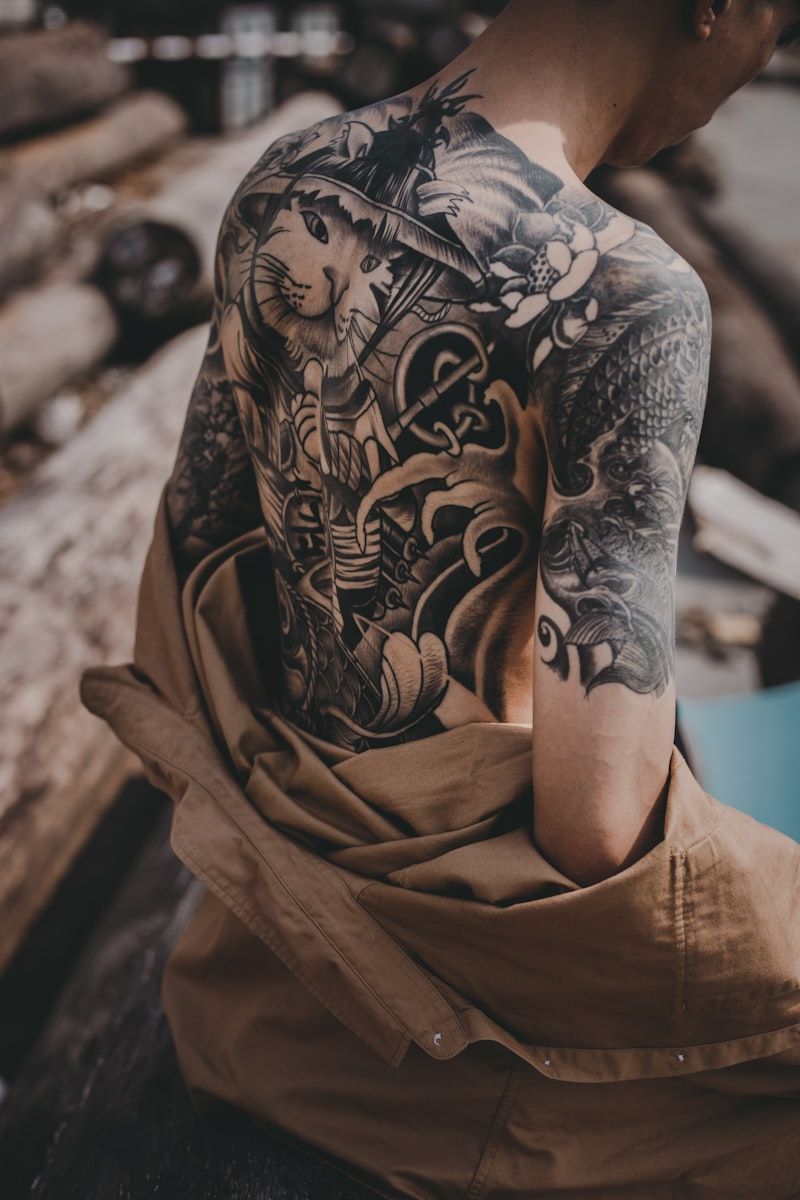 Legal & Licensing
An overview of what health certificate requirements for tattoo artists in Thailand generally involve, including who needs one and how they are maintained.
By Marcus Thorne6 min read
Training & Guides Symmetry on curved, moving skin is harder than it looks on paper. Here is the layered approach many Thailand-based instructors use to teach visual balance before a single line is drawn.
By Ajarn Somchai4 min read
 Equipment
A practical comparison of rotary and coil tattoo machines for students in 2026, covering hand control, maintenance demands, and how to choose what to train on first.
By Viktor Vance5 min read
 Training & Guides
Ink behaves differently across the full range of skin tones, and a curriculum that only practices on one type leaves graduates unprepared. Here is what actually needs to be learned.
By Viktor Vance4 min read
Training & Guides Chasing speed too early ruins line quality, but working too slowly causes its own problems. Here is how deliberate practice builds real speed without cutting corners.
By Marcus Thorne4 min read
Legal & Licensing A rundown of the licensing and compliance mistakes that new tattoo studio owners in Thailand most commonly make, and how to avoid repeating them.
By Tattoo Training Advisor7 min read
Training & Guides A strong tattoo portfolio starts on paper, months before your first needle ever touches skin. Here's how to build the specific drawing fundamentals that actually transfer to machine work and impress future employers.
By Viktor Vance4 min read
Training & Guides The gap between finishing a course and feeling like a real artist is wider than most students expect. Here is a realistic month-by-month picture of what the first six months actually involve.
By Tattoo Training Advisor4 min read
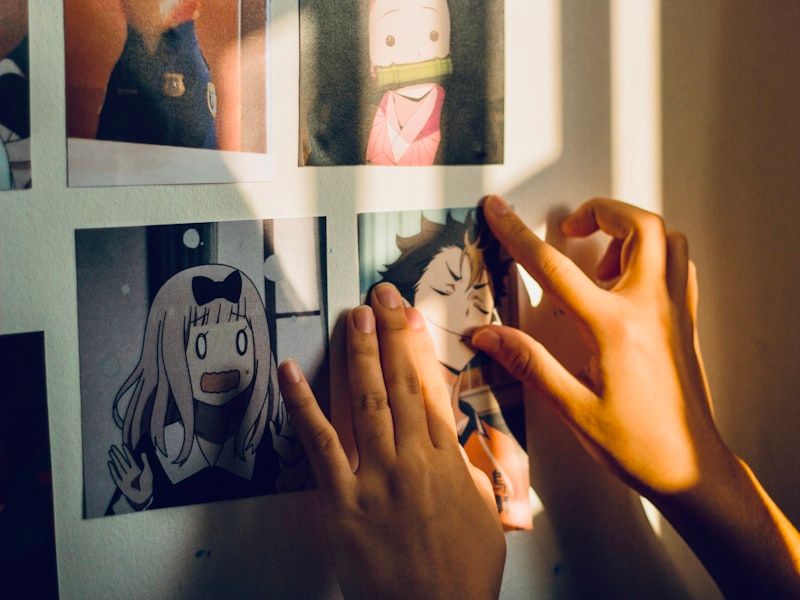 Sacred Art & Sak Yant
Sak Yant and contemporary spiritual tattoos both promise personal meaning and protection, but they draw on very different sources of authority, technique, ritual, and lineage.
By Ajarn Somchai6 min read
Training & Guides Job-ready means something specific in tattooing, and it isn't the same as course-completed. Here's a realistic timeline based on how studios actually evaluate new artists.
By Viktor Vance4 min read
Training & Guides Technical talent is common among apprentices; what actually predicts long-term success is a smaller set of habits around feedback, initiative, and how mistakes get handled.
By Niran Sethi4 min read
Equipment Choosing an autoclave for a small training studio means balancing chamber size, cycle type, validation testing, and realistic daily throughput against a limited budget and floor space.
By Tattoo Training Advisor4 min read
Training & Guides Graduation should not be the last conversation you have with your training program. Here is what genuine post-course support looks like, and how to evaluate it before you enroll.
By Viktor Vance4 min read
Training & Guides Fine line tattoos look minimal and simple, which leads many beginners to seriously underestimate the discipline required to execute them well. Here's why the style demands more precision than bolder work, not less.
By Niran Sethi4 min read
 Equipment
Cartridge codes look like random letters and numbers, but they describe exactly how a needle will perform. Here is how to decode them like a working professional.
By Marcus Thorne4 min read
Training & Guides A tablet and a design program are now as essential as a machine and a needle. Here is the specific digital skill set that separates a modern graduate from one stuck with pencil and tracing paper.
By Ajarn Somchai4 min read
Training & Guides Most students ask for feedback and get vague encouragement in return. Here is how to ask questions that produce specific, usable answers instead of generic praise.
By Marcus Thorne4 min read
Training & Guides Flat forearms and calves teach basic technique, but ribs, wrists, and joints demand an entirely different set of adjustments. Here's how training programs prepare students for these harder placements.
By Tattoo Training Advisor4 min read
Legal & Licensing A general overview of how import duties and customs procedures can affect tattoo machines, needles, and other equipment brought into Thailand.
By Tattoo Training Advisor6 min read
Legal & Licensing An overview of the areas a health inspector typically reviews when visiting a tattoo studio in Thailand, from sterilization practices to record keeping.
By Marcus Thorne6 min read
Training & Guides Neo-traditional tattooing rewards artists who master bold structure before ornamentation. This roadmap outlines the skill order a beginner should follow to build the style properly.
By Ajarn Somchai4 min read
Equipment Convention booths compress a full studio into a few square feet with no backup down the hall. Here is a practical packing framework so nothing critical gets left behind.
By Tattoo Training Advisor7 min read
Training & Guides Portrait work commands premium pricing and client loyalty, but it punishes shortcuts more than almost any other style. Here's why serious students should approach it early and deliberately.
By Niran Sethi5 min read
Equipment Not all cartridge needles perform the same, even within similar configurations. Here is how students can evaluate brand differences in membrane design, consistency, and feel.
By Marcus Thorne7 min read
Legal & Licensing A practical look at the steps involved in registering a tattoo studio's name and business entity in Thailand, from choosing a structure to clearing local licensing hurdles.
By Niran Sethi6 min read
Training & Guides Certification means little without a rigorous assessment behind it. Here's how well-run tattoo training programs actually evaluate whether a student is ready to work independently.
By Viktor Vance4 min read
Sacred Art & Sak Yant In Sak Yant, a practitioner's teaching lineage signals more than experience — it carries accountability, spiritual authority, and the specific chants passed down through the generations.
By Ajarn Somchai7 min read
Sacred Art & Sak Yant The traditional bamboo tapping method behind Sak Yant looks simple to watch but takes years to master, demanding steady rhythm, precise depth control, and real patience.
By Tattoo Training Advisor6 min read
Training & Guides Machine work and hand-poke tattooing build different muscle memory and different instincts about depth and control. Here's how to decide which discipline should come first in your training, and why the order actually matters.
By Niran Sethi4 min read
Training & Guides Studying tattooing abroad means adjusting to more than just technique, from visas and language to classroom hierarchy. Here's what international students typically navigate while training in Thailand, and how to prepare for it.
By Niran Sethi4 min read
Equipment Liners, shaders, and magnums each move ink into skin in a completely different way. Understanding how they behave is one of the clearest markers separating a well-trained tattoo artist from a beginner.
By Marcus Thorne5 min read
Equipment Grip diameter quietly shapes hand fatigue, line confidence, and shading control, yet most new students spend their budget on machines instead. Here is why that priority is backwards.
By Viktor Vance6 min read
Training & Guides Synthetic skin is where most early mistakes should happen, not on a live client. Here's how to judge when you've actually put in enough practice to move on.
By Ajarn Somchai4 min read
Training & Guides Curious what actually happens hour by hour inside a Bangkok tattoo school? Here's a realistic breakdown of a training day, from morning theory to evening critique.
By Ajarn Somchai4 min read
Sacred Art & Sak Yant Beyond the tapping needle, quiet chanting runs through every Sak Yant session. Here's where these Pali and Khmer-derived mantras come from and what they're believed to do.
By Tattoo Training Advisor6 min read
Equipment Building a first full equipment kit means knowing where to spend more, where to save, and how to budget across categories without overspending too early.
By Viktor Vance5 min read
Sacred Art & Sak Yant Machine-made yantra tattoos and traditional hand-tapped Sak Yant sessions can look similar on skin but represent very different experiences. Here's how to tell them apart.
By Niran Sethi6 min read
Equipment Good healing outcomes start with clear, specific aftercare guidance from the studio. Here is what to recommend for cleansing and moisturizing a fresh tattoo, and which products clients should avoid entirely.
By Tattoo Training Advisor4 min read
Sacred Art & Sak Yant From the fierce Suea tiger to the loyal warrior Hanuman, animal figures carry deep symbolic weight in Sak Yant. Here's what the most common designs represent.
By Niran Sethi6 min read
Legal & Licensing An introduction to the types of insurance coverage tattoo studios in Thailand commonly consider, from liability protection to property and equipment cover.
By Marcus Thorne6 min read
Training & Guides Thailand has become a destination for aspiring tattoo artists from around the world. The reasons go beyond cost of living, touching training culture, client diversity, and career flexibility.
By Ajarn Somchai4 min read
Legal & Licensing A look at how age verification typically works for tattoo studios in Thailand, including documentation, parental consent, and studio record keeping.
By Niran Sethi5 min read
Training & Guides From gripping too tight to ignoring voltage adjustments, first-time students repeat the same handful of machine errors. Recognizing them early saves weeks of frustration.
By Viktor Vance4 min read
Equipment A chair or table that fails to support long sessions costs both artist and client comfort, and often the quality of the work itself. Here is what actually matters when choosing one.
By Marcus Thorne6 min read
Equipment Lighting affects color accuracy, eye strain, and shading precision in ways many artists never consciously evaluate. Here is how LED and traditional lighting actually compare at the station.
By Viktor Vance6 min read
Training & Guides Technical skill gets a tattooer in the door, but communication keeps clients coming back. Here's how well-designed training programs build this skill deliberately rather than leaving it to chance.
By Tattoo Training Advisor4 min read
Training & Guides Certification is the beginning of a career, not the end of a checklist. Here's a realistic look at the path from finishing training to eventually running your own studio.
By Marcus Thorne4 min read
Equipment Every piece of tattoo equipment has a realistic service life, but few artists track it deliberately. Here is a practical replacement and servicing schedule by category.
By Viktor Vance7 min read
Equipment Ink saturation is often blamed on technique or machine settings, but the skin's surface condition before the first line matters just as much. Here is what genuinely helps.
By Tattoo Training Advisor7 min read
Legal & Licensing What tattoo studio owners in Thailand should generally expect when it comes time to renew business, health, and municipal licenses each year.
By Marcus Thorne6 min read
Training & Guides Not every skilled tattoo artist makes a good teacher. Here's a practical framework for vetting mentors, from portfolio red flags to the questions that actually reveal teaching ability.
By Niran Sethi4 min read
Legal & Licensing A breakdown of what a Non-Immigrant B visa application for foreign tattoo artists working in Thailand generally involves, from sponsorship to supporting documents.
By Niran Sethi7 min read
Legal & Licensing An overview of how general waste disposal and biological waste handling expectations apply to tattoo studios operating in Thailand, including sharps storage, collection contracts, and staff training.
By Tattoo Training Advisor6 min read
Equipment Guest spots demand a self-sufficient travel kit. Here is what to pack, what to leave at home, and how to keep essential tattoo equipment safe in transit.
By Viktor Vance5 min read
Sacred Art & Sak Yant Sak Yant's roots stretch back through Khmer script, Buddhist merit, and animist belief, evolving over centuries from battlefield protection into Thailand's most enduring sacred tattoo tradition today.
By Niran Sethi6 min read
Sacred Art & Sak Yant Not every Sak Yant design is given freely — some are reserved for certain people, roles, or levels of readiness. Here's why that discernment lies at the heart of the tradition.
By Ajarn Somchai6 min read
Sacred Art & Sak Yant The Hah Taew is one of the most requested Sak Yant designs, its five vertical lines each carrying its own commonly described blessing and purpose.
By Ajarn Somchai7 min read
Training & Guides Sanitation isn't a footnote in tattoo training, it's the first thing to evaluate before anything else. Here's what a genuinely rigorous school's standards look like.
By Marcus Thorne4 min read
Equipment Disposable grips and reusable tubes both work safely in the right hands, but training studios still need to weigh sterilization workload, ongoing cost, and student exposure before standardizing on either one.
By Tattoo Training Advisor4 min read
Sacred Art & Sak Yant Serious Sak Yant training is a slow, years-long apprenticeship built on observation, repetition, and character development, not a short weekend workshop covering tattoo technique alone.
By Tattoo Training Advisor7 min read
Equipment Rotary machines need less maintenance than coils, but not none. Here is the daily and weekly routine that keeps a rotary machine reliable for years.
By Tattoo Training Advisor4 min read
Sacred Art & Sak Yant Shared needles and communal ink pots once defined mass Sak Yant ceremonies. Here's how modern hygiene concerns reshaped the practice without erasing its sacred core.
By Tattoo Training Advisor6 min read
Equipment Not all stencil supplies are created equal. Here is where spending a bit more on transfer paper, application solution, and printers actually pays off in results.
By Marcus Thorne4 min read
Sacred Art & Sak Yant Before booking a Sak Yant session, foreign visitors should understand the ritual, precepts, and etiquette behind the tattoo, not just its striking visual design and symbolism.
By Ajarn Somchai7 min read
Equipment A sanitary workstation comes down to one simple principle: separating clean zones from contaminated zones and never letting the two mix, from setup through the final reset after a client leaves.
By Marcus Thorne5 min read
Equipment Cartridge and bar needle systems solve the same underlying problem in very different ways. Here is how each one performs in practice and which is the better fit for training environments.
By Viktor Vance4 min read
Equipment The power supply is the least glamorous piece of tattoo equipment on the cart, but voltage consistency from it determines nearly everything else that happens during a tattoo session.
By Marcus Thorne4 min read
Sacred Art & Sak Yant Mastering the Khom script that underlies every Sak Yant design takes far longer than learning to draw a yantra, requiring years of guided repetition and study.
By Tattoo Training Advisor7 min read
Equipment Tattoo ink behaves like an implanted medical product once it is under the skin. Here is what every beginner should understand about safety standards before opening a bottle.
By Viktor Vance4 min read
Sacred Art & Sak Yant Sak Yant is not a single uniform practice; regional lineages across central, northern, and southern Thailand, plus neighboring Cambodia, have shaped distinct visual and ritual styles.
By Niran Sethi7 min read
Sacred Art & Sak Yant The Gao Yord is one of the most recognized Sak Yant designs in Thailand, its nine spires representing layered protection, blessing, and spiritual ascent toward higher virtue.
By Niran Sethi7 min read
Sacred Art & Sak Yant Receiving a Sak Yant involves more than sitting still for the needle; a set of customary behaviors before, during, and after the tattoo shows proper respect.
By Ajarn Somchai6 min read
Sacred Art & Sak Yant A Sak Yant blessing ceremony brings chanting, ritual gestures, and communal energy that together complete the tattoo's spiritual purpose long after the ink itself has healed.
By Tattoo Training Advisor7 min read
Sacred Art & Sak Yant Sak Yant tattoos can be hand-tapped with either bamboo or steel, two traditional tools with different histories, sensations, and practical trade-offs for both practitioner and recipient.
By Niran Sethi6 min read
Training & Guides Thailand's three major training hubs each offer a genuinely distinct environment for learning the craft. Here's how Bangkok, Chiang Mai, and Phuket compare on class size, client exposure, and cost for prospective students.
By Tattoo Training Advisor4 min read
Sacred Art & Sak Yant An Ajarn is teacher, spiritual guide, and ritual practitioner all in one, whose responsibilities extend well beyond the technical act of tattooing a design onto skin.
By Ajarn Somchai6 min read
Legal & Licensing A general look at how freelance and guest tattoo artists working in Thailand may need to think about tax registration, income reporting, and studio arrangements.
By Niran Sethi6 min read
Legal & Licensing An exploration of how copyright principles generally apply to custom tattoo artwork in Thailand, covering ownership, reuse, and client expectations.
By Marcus Thorne6 min read
Equipment A smaller, deliberately chosen equipment set often serves new artists better than a sprawling kit full of rarely used extras. Here is how to build one without sacrificing quality.
By Viktor Vance7 min read
Equipment Wireless machines offer freedom of movement but bring their own maintenance demands, while corded machines trade mobility for simplicity and reliability. Here is how they compare for students.
By Tattoo Training Advisor6 min read
Equipment Poor ink storage silently degrades pigment consistency long before a bottle looks visibly off. Here is how proper cap use and storage protect both saturation and safety.
By Marcus Thorne6 min read
Training & Guides Black and grey remains the most requested style in most studios worldwide, and it's also the technical foundation nearly every other style builds on. Here are the core shading techniques Thai academies drill first.
By Ajarn Somchai4 min read
Training & Guides Realism looks like the most impressive style to master, and beginners often chase it too early. Here are the specific mistakes that stall new realism students.
By Marcus Thorne4 min read
Training & Guides An apprenticeship offers something a classroom can't: sustained, one-on-one correction from a working artist. Here's how the model works and how to find the right mentor.
By Tattoo Training Advisor4 min read
Legal & Licensing An explanation of the general concept behind Thai employment ratios for foreign staff, and how it can affect a tattoo studio's plans to hire foreign artists.
By Tattoo Training Advisor6 min read
Sacred Art & Sak Yant There is no diploma or fixed timeline for becoming a Sak Yant master. Recognition comes only through years of apprenticeship, memorization, and a teacher's personal endorsement.
By Ajarn Somchai7 min read
Equipment Bundled beginner kits look like a bargain, but hidden costs in inconsistent needles, underpowered motors, and unusable accessories often make them more expensive than buying deliberately.
By Tattoo Training Advisor6 min read
Training & Guides Color theory is often treated as an afterthought in tattoo education, yet it shapes healing, contrast, and longevity as much as needle technique. Here's why it belongs early in any serious curriculum.
By Marcus Thorne4 min read
Equipment Sterilization is not a single step but a sequence, and skipping or reordering any part of it undermines the whole process. Here is the correct sequence and why each stage matters.
By Viktor Vance7 min read
Equipment Gloves protect artist and client alike, but the wrong pair sacrifices the tactile feedback needed for clean work. Here is how to weigh barrier protection against fine motor control.
By Marcus Thorne6 min read
Training & Guides Course prices for tattoo training vary enormously, and the sticker price alone tells you almost nothing about value. Here's what actually determines whether a course is worth paying for.
By Marcus Thorne4 min read
Training & Guides Both training formats can produce excellent tattooers, but they suit different learning styles and circumstances. Here's an honest comparison to help decide which fits you.
By Ajarn Somchai4 min read
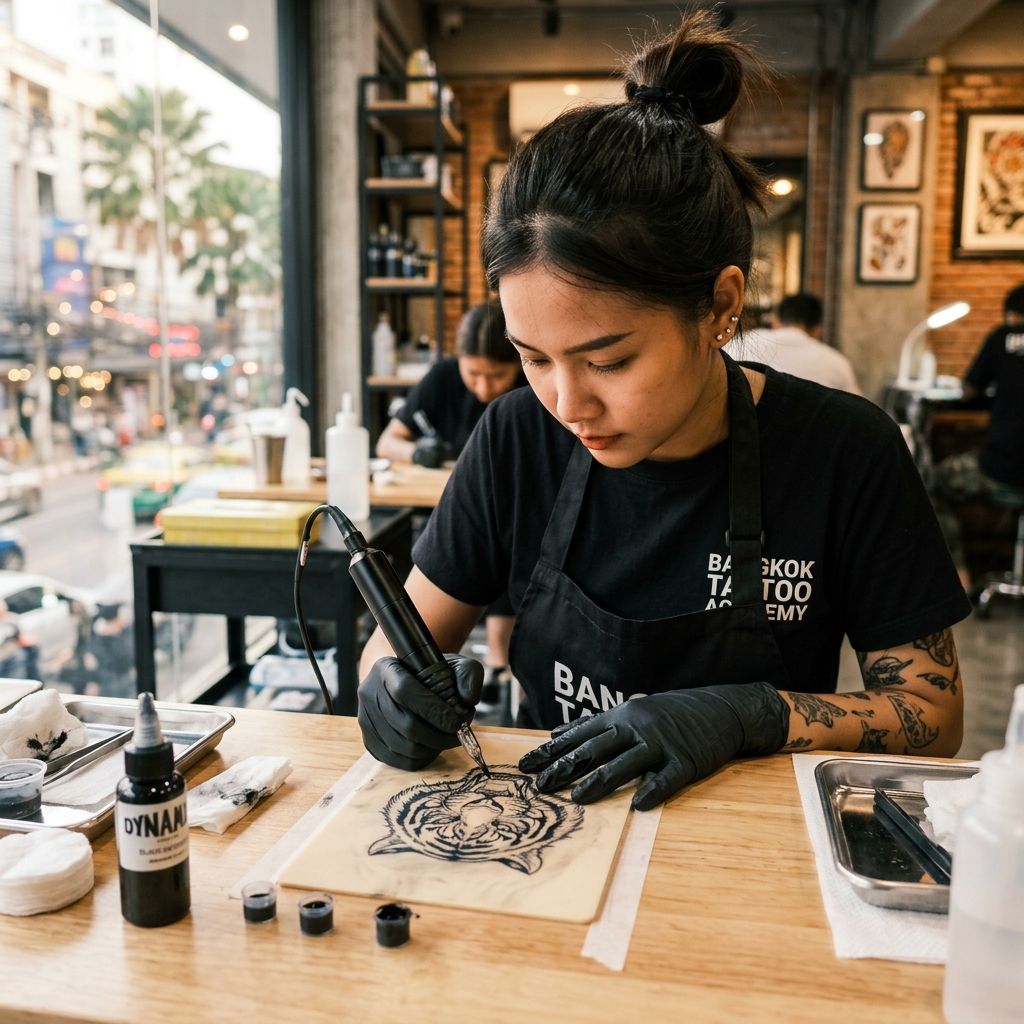 Training Guides
Interested in starting your tattoo career in Thailand? Discover course costs, top locations, hygiene standards, and how to pick the perfect training academy.
By Marcus Thorne6 min read
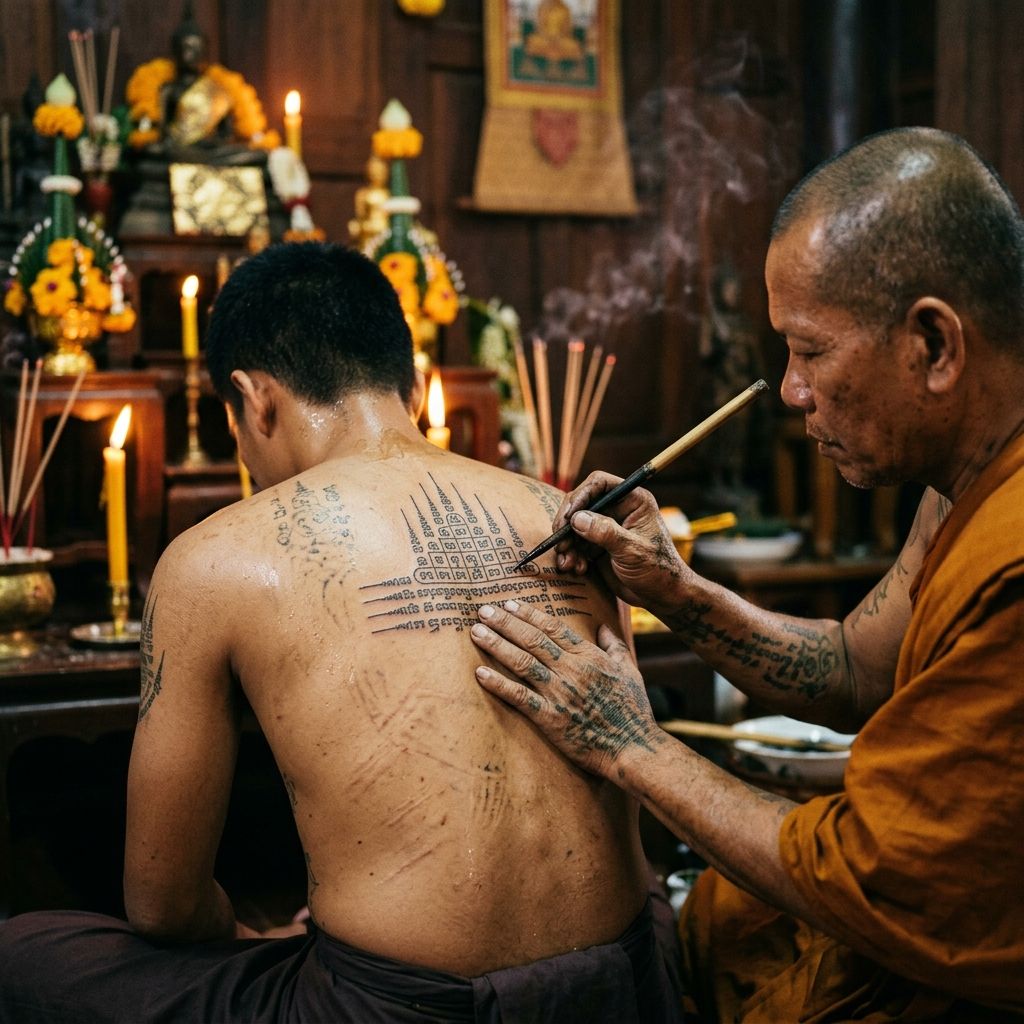 Sak Yant Tradition
Unravel the mystical art of traditional Thai bamboo hand-poke tattooing. Learn about sacred geometry, Lanna rules, and authentic training programs.
By Ajarn Somchai8 min read
 Career Advice
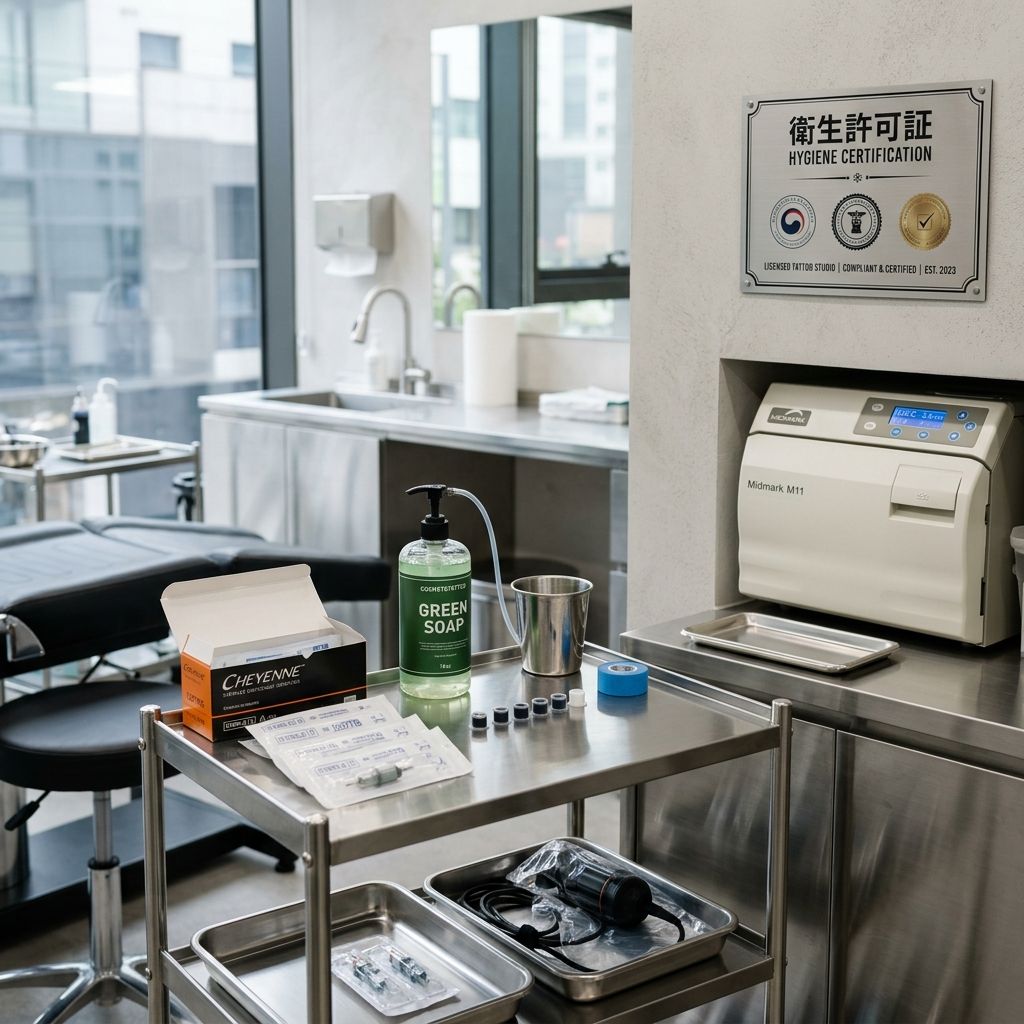
Looking to work as a tattoo artist or open a shop in Thailand? Here is the legal breakdown on licensing, health inspections, and work permits.
By Niran Sethi5 min read
 Design & Gear
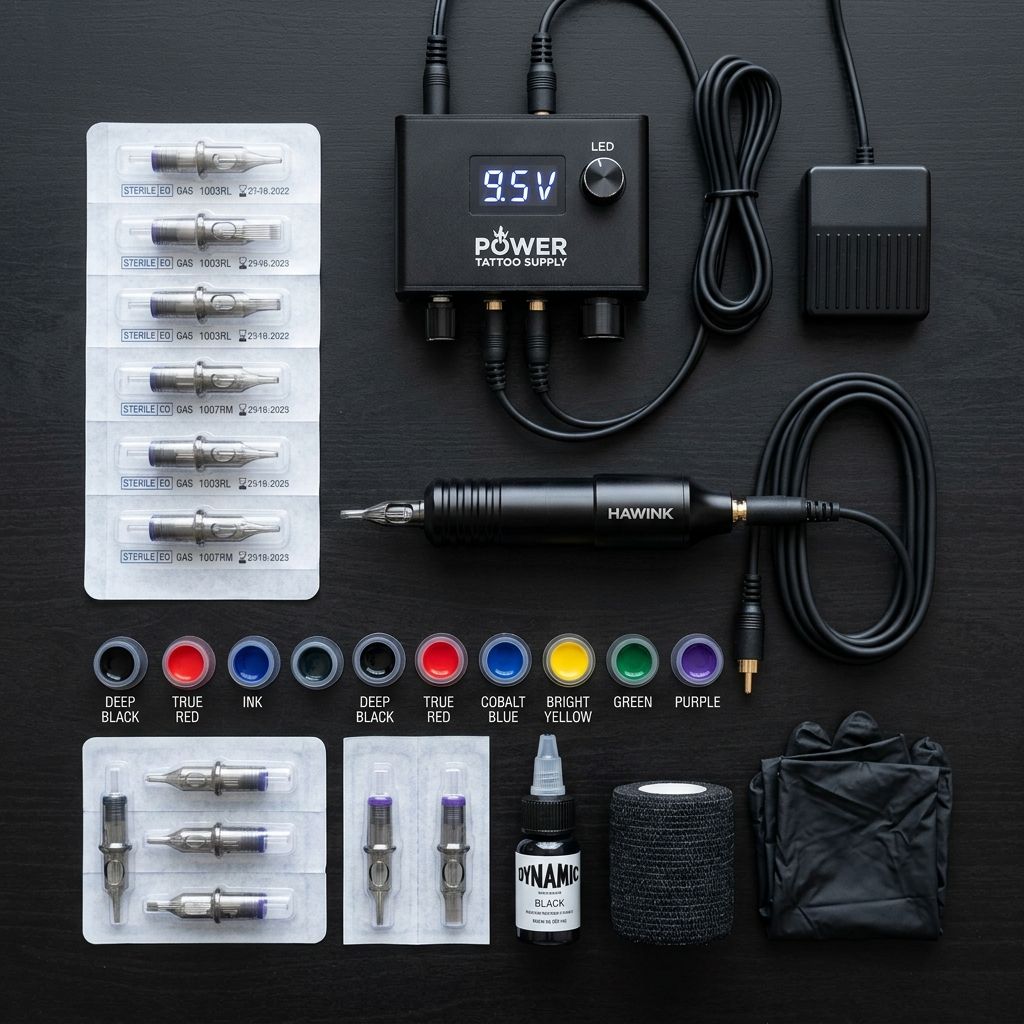
A list of essential, professional equipment for apprentice tattoo artists. Learn what to look for in rotary pens, cartridges, and sterile setups.
By Viktor Vance5 min read