How Sak Yant Apprentices Learn the Khom Script
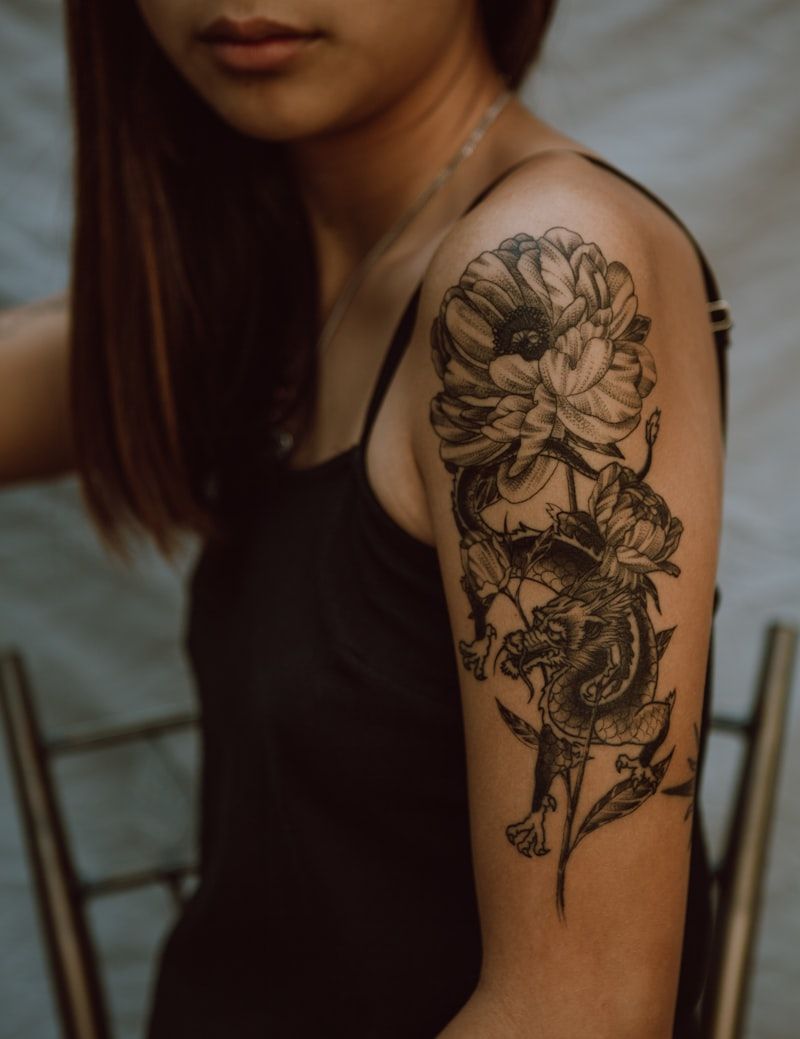
More Than Just Letters Anyone who watches a Sak Yant being applied will notice the rows of angular characters woven into the design. This is Khom script, an ancient writing system derived from Khmer, used across Sak Yant tradition to render sacred syllables, chants, and protective phrases directly into the skin. For an apprentice hoping to one day tattoo under their own name, learning this script is not a side skill. It is one of the central disciplines of the training, often taking years before a student is trusted to render it correctly.
Why the Script Cannot Be Rushed Khom script is visually striking but functionally precise. A single stroke placed incorrectly can change the meaning of a sacred syllable, and in a tradition where the script is believed to carry spiritual power, accuracy is treated as a matter of integrity rather than aesthetics alone. Apprentices are typically taught that:
- Every character has a fixed form passed down through their teacher's lineage, and improvisation is discouraged until deep fluency is achieved.
- The script is inseparable from the chants it represents, meaning students must learn the spoken invocations alongside the written characters.
- Copying a design without understanding its underlying script is considered incomplete training, even if the visual result looks convincing.
Because of this, an apprentice's early years often involve far more repetition than creativity. Freehand improvisation comes only after the fundamentals are secure.
The Stages of Learning While every Ajarn structures training differently, a general progression tends to hold across lineages:
- Observation. New students spend considerable time simply watching their teacher work, absorbing the rhythm of hand-tapping and the sequence in which script and yantra elements are applied.
- Copying on paper. Before ever touching skin, apprentices practice drawing Khom characters repeatedly on paper or slate, aiming for consistency in proportion, spacing, and stroke order.
- Chanting alongside writing. Students learn to recite the associated Pali or Khmer-derived chants as they write, since the script and the spoken word are treated as two expressions of the same sacred content. Practice on non-human surfaces, such as cloth or fruit skins, allows students to build hand control with a bamboo or metal tool before working on a real client.
- Supervised tattooing. Only after demonstrating consistent accuracy is a student permitted to tattoo under close supervision, usually starting with simple designs before progressing to full yantra compositions.
This structure mirrors many traditional apprenticeship systems, where fundamentals must be internalized long before independent work begins.
The Role of Memory and Repetition Because Sak Yant is largely an oral and hands-on tradition rather than one learned from textbooks, memory plays an outsized role. Apprentices commit entire scripts and chants to memory, often reciting them daily until the sequence becomes second nature. This repetition serves two purposes: it ensures accuracy under the pressure of tattooing a live client, and it is believed to deepen the practitioner's own spiritual discipline, since reciting sacred script is itself considered a devotional act.
Some apprentices keep handwritten notebooks of designs and their associated script, built up over years of study, functioning as a personal reference guide long after they have technically memorized the material. These notebooks are often treated with real reverence, reflecting the seriousness with which the script is regarded.
Earning the Right to Write Ultimately, learning Khom script is less about calligraphy and more about earning trust, both from a teacher and from the tradition itself. An Ajarn will typically not allow a student to tattoo script independently until satisfied that the student understands not just how to draw the characters, but what they mean, when they are appropriately used, and how they should be activated through blessing.
For visitors curious about Sak Yant, this slow, careful process is a useful reminder that the script running through a yantra is not ornamental. It is the working heart of the design, and the years an apprentice spends learning to render it faithfully are central to why genuine Sak Yant training cannot be compressed into a short course.
What sets Khom apart from ordinary calligraphy. It is worth pausing on why Khom script demands a different kind of attention than learning an ordinary alphabet for artistic purposes. Several factors combine to make it a uniquely demanding subject for a student:
- The script is rarely taught from printed manuals; most instruction happens through direct demonstration and correction from a teacher, which means access to a qualified Ajarn is itself a limiting factor in how quickly a student can progress.
- Regional variation exists between lineages in how certain characters or combinations are rendered, so a student's version of the script is shaped specifically by whoever taught them.
- Because the same script is used for both permanent tattoos and temporary sacred inscriptions on cloth or paper, students often practice across multiple mediums before ever working on skin, building versatility alongside precision.
This combination of oral transmission, lineage-specific variation, and cross-medium practice is part of why Khom script has remained a living craft passed between individuals, rather than something that can be picked up independently from a book or a short online course.