Learning the Two-Handed Tap: A Slow and Deliberate Skill
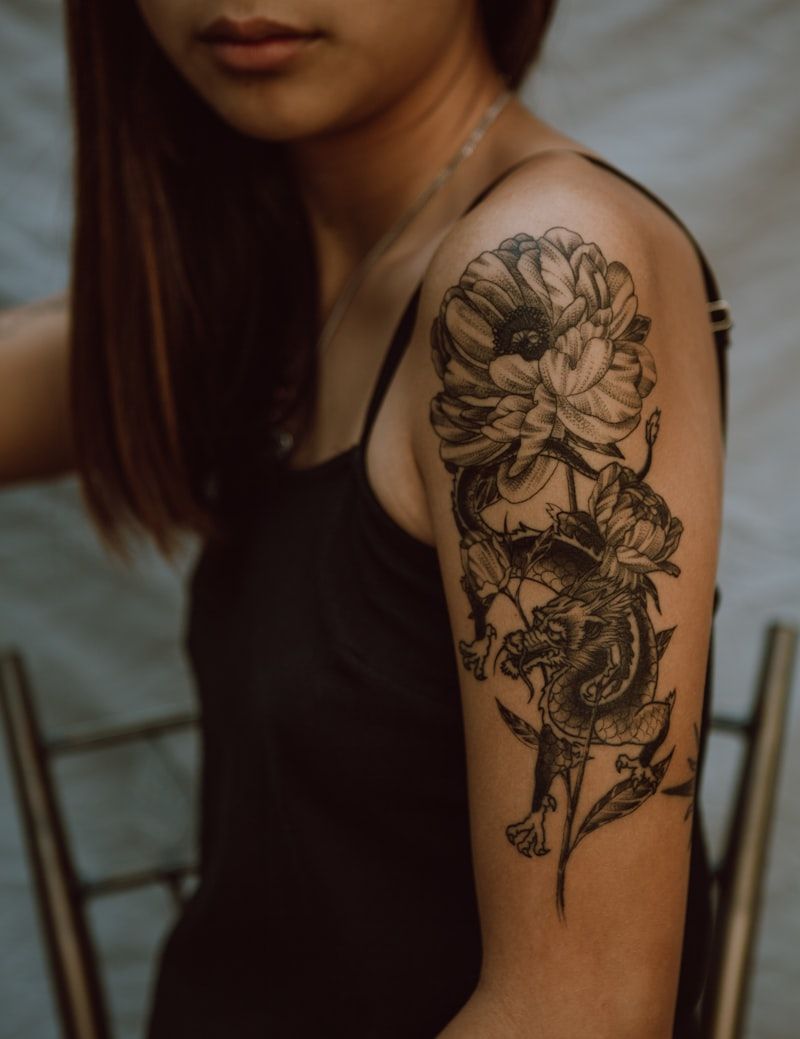
Anyone who has watched a Sak Yant session in person notices the same thing almost immediately: how unhurried it looks. There is no buzzing machine, no rapid mechanical repetition. Instead, a practitioner holds a long rod steady with one hand while tapping its end rhythmically with the other, driving a small needle cluster into the skin one measured strike at a time. It looks simple. Learning to do it well, consistently, and safely is anything but.
A Method Defined by Restraint
The traditional hand-tapping technique, known as mai sak or the bamboo tattooing method, relies on a long, slender rod — historically bamboo, though metal rods are common today — with a needle cluster fixed at one end. The practitioner holds this rod at an angle against the skin with one hand, steadying and guiding it, while the other hand delivers a series of controlled taps to drive the needles in and pull them back out in a continuous rhythm.
Every element of this process depends on restraint rather than force. Too light a tap and the ink fails to seat properly in the skin; too heavy a tap risks excessive bleeding, uneven lines, or unnecessary pain. The entire technique is built around finding a middle register of pressure and repeating it, many times over, with almost no variation, across a session that can last well over an hour for an elaborate design.
The Tools: Simplicity With High Stakes
Part of what makes the two-handed tap so demanding to learn is the deceptive simplicity of its tools. Unlike a modern tattoo machine, which mechanically standardizes needle depth and speed, the mai sak offers no automatic consistency. The practitioner's hands are the only regulating mechanism, which means every variable — depth, spacing, angle, and rhythm — is a product of the practitioner's own trained control rather than the equipment's design.
This puts enormous weight on repetition and muscle memory built over years. A slight inconsistency in angle can distort a line; an uneven tapping rhythm can create patchy shading or an uneven spread of ink. Because the needle cluster strikes the skin repeatedly during sustained tapping, a lapse in control has almost no room to be corrected mid-stroke.
Rhythm, Depth, and Control
Experienced practitioners often describe the process less as a physical technique and more as an ongoing exercise in sustained focus. The rhythm has to remain steady enough to produce a clean, even line, but the hand delivering the taps also has to modulate subtly depending on the part of the body being tattooed, since skin thickness and sensitivity vary considerably from the shoulder to the ribs to the leg.
Depth control matters as much as rhythm. Too shallow, and the ink will fade quickly or fail to hold; too deep, and the recipient experiences unnecessary trauma to the skin, along with a higher risk of excess scarring. Learning to judge this by feel, in real time, across different body areas and different skin types, is one of the technical skills that separates an experienced practitioner from a beginner.
Why the Skill Takes Years, Not Weeks
This is why the hand-tapping method is generally not something picked up quickly, even by someone who has spent years working with a modern tattoo machine. The physical mechanics are genuinely different, and the tolerance for error is lower, since there is no motor providing consistent depth or speed on the practitioner's behalf.
Traditionally, students spend a long apprenticeship period simply observing before they are permitted to tattoo anyone themselves, often practicing the tapping rhythm on non-skin surfaces first to build consistent muscle memory. Only gradually, under a teacher's direct supervision, are they allowed to work on real skin, typically starting with simple lines or small designs before progressing toward the more elaborate multi-line yantras that require sustained control over a long session.
Patience as the First Lesson
Perhaps the deepest lesson embedded in learning the two-handed tap has little to do with technique at all. The method demands patience from everyone involved — the student learning it, the teacher supervising it, and the recipient sitting through a session that unfolds at a pace no machine would ever choose. That shared patience is, in its own way, part of what gives the tradition its distinctive character: a reminder that some skills are not meant to be rushed, and that the slowness of the process is not a limitation to engineer around, but a feature the tradition has preserved deliberately across generations.